1. Introduction
Rehabilitation after surgery or injury is a critical process that helps patients regain strength, mobility, and independence. Whether recovering from orthopedic surgery, a sports injury, or general trauma, proper rehabilitation ensures faster healing and reduces the risk of complications.
Unlike just resting, rehabilitation involves structured exercises, therapy sessions, and lifestyle adjustments that support the body’s natural healing process. It is an essential step in regaining normal function and improving overall quality of life.
2. What Is Rehabilitation After Surgery or Injury?
Recovery therapy is a planned and guided program designed to restore physical abilities after surgery or an injury. It focuses on:
- Improving joint mobility
- Strengthening muscles
- Reducing pain and swelling
- Enhancing functional independence
It is commonly used for patients after knee replacement, ACL surgery, shoulder injuries, fractures, or major trauma. Post-surgery care differs from general exercise because it is tailored to the patient’s condition and recovery stage.
3. How Rehabilitation Works
Rehabilitation works through progressive exercises, therapy, and monitoring. Here’s the principle:
- Assessment: Doctors or physiotherapists evaluate the patient’s condition.
- Planning: A recovery plan is made, including exercises, therapy frequency, and duration.
- Execution: The patient performs exercises under supervision or at home.
- Monitoring: Progress is tracked, and adjustments are made as needed.
Post-surgery care often combines physical therapy, occupational therapy, and sometimes mental health support to ensure holistic recovery.
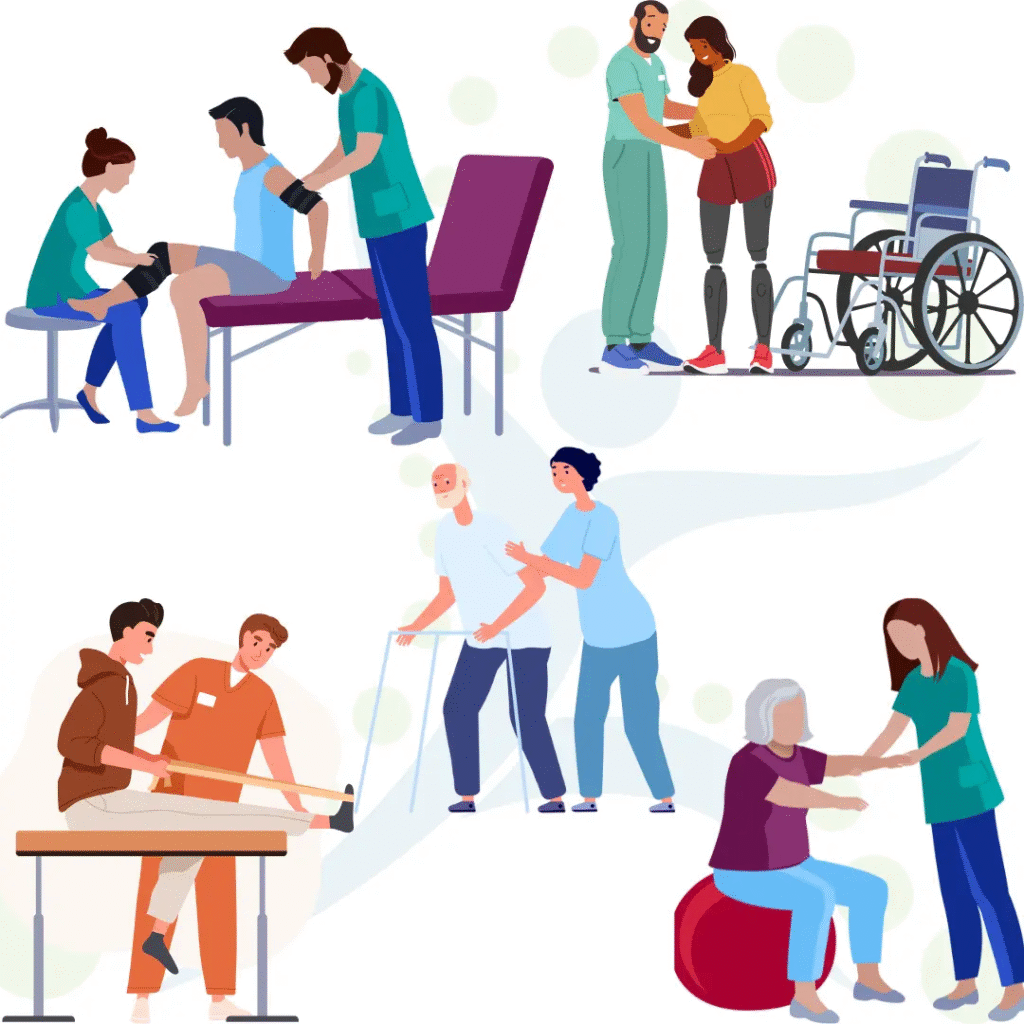
4. The Rehabilitation Procedure
Step 1: Initial Assessment
- Evaluate range of motion, strength, and pain level.
- Identify limitations caused by surgery or injury.
Step 2: Planning
- Create a personalized Post-surgery care program.
- Set short-term and long-term recovery goals.
Step 3: Early Recovery
- Focus on gentle movements to prevent stiffness.
- Pain management using ice, medication, or electrical therapy.
Step 4: Progressive Exercise
- Introduce resistance training and functional exercises.
- Improve endurance, balance, and coordination.
Step 5: Functional Rehabilitation
- Train for daily activities or sports-specific movements.
- Gradually increase intensity under therapist supervision.
Step 6: Recovery Evaluation
- Regular check-ups to track improvement.
- Adjust the program based on progress and patient feedback.
5. Safety and Precautions
- Always follow the guidance of a trained physiotherapist or doctor.
- Avoid overexertion or exercises that cause sharp pain.
- Monitor swelling, bruising, or unusual symptoms.
- Use assistive devices like braces or crutches if recommended.
- Gradually increase intensity to prevent setbacks.
6. Types of Rehabilitation
Orthopedic Rehabilitation
- Focused on bones, joints, and muscles after fractures or surgeries.
Neurological Rehabilitation
- Helps patients recover from stroke, spinal cord injuries, or brain trauma.
Cardiac Rehabilitation
- Designed for heart surgery patients or those recovering from cardiac events.
Sports Injury Rehabilitation
- Targets athletes recovering from ligament, tendon, or muscle injuries.
Post-Surgical Rehabilitation
- Includes mobility exercises, strength training, and functional activities to regain independence.
7. Advantages of Rehabilitation
- Faster Recovery: Structured therapy speeds up healing.
- Pain Reduction: Targeted exercises help manage discomfort.
- Improved Mobility: Restores range of motion and flexibility.
- Prevents Complications: Reduces stiffness, blood clots, and muscle loss.
- Enhanced Quality of Life: Patients regain independence and confidence.
8. Limitations of Post-surgery care
- Time-Consuming: Recovery can take weeks to months.
- Requires Discipline: Consistency in exercises is crucial.
- Possible Costs: Physiotherapy sessions may be expensive.
- Individual Variation: Recovery rates differ among patients.
9. Future of Rehabilitation
- Tele-rehabilitation: Remote monitoring and virtual therapy sessions.
- AI and Robotics: Robotic exoskeletons assist mobility training.
- Wearable Devices: Track progress and guide exercises.
- Personalized Programs: Using data to optimize recovery for each patient.
10. Conclusion
Post-surgery care after surgery or injury is essential for full recovery and long-term health. A structured program combining exercises, therapy, and lifestyle management ensures faster healing, reduces complications, and improves quality of life.
Patients should follow professional guidance, remain consistent, and monitor progress to maximize results. With modern rehabilitation techniques, recovery has become safer, faster, and more effective than ever before.
visit the page understanding of MRI